
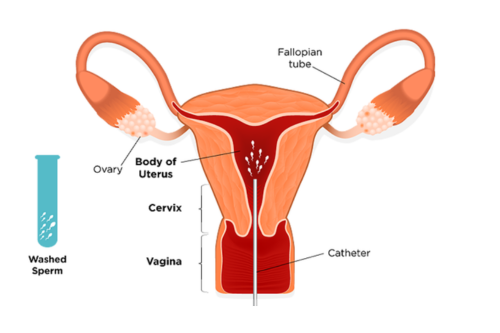
What is Intrauterine Insemination (IUI)?
Who Should Consider IUI Treatment?
Dr. Meenakshi Charaya Khobragade carefully evaluates each patient before recommending IUI. This treatment may be suitable for couples facing various fertility challenges.
IUI is commonly recommended for:
1. Unexplained Infertility
Sometimes couples struggle to conceive despite normal test results. IUI can improve the chances of pregnancy in such cases.
2. Mild Male Factor Infertility
Low sperm count, reduced sperm motility, or mild sperm abnormalities can affect fertility. IUI uses processed sperm to improve fertilization chances.
3. Cervical Factor Infertility
Thick cervical mucus may prevent sperm from reaching the egg. IUI bypasses the cervix and directly places sperm into the uterus.
4. Ovulation Problems
Women who experience irregular ovulation may benefit from ovulation induction medications combined with IUI.
5. Endometriosis (Mild Cases)
IUI can help women with mild endometriosis conceive.
6. Donor Sperm Treatment
IUI may be used when donor sperm is required.
How Does the IUI Procedure Work?
The IUI process involves several carefully planned steps to maximize the chances of successful fertilization. Dr. Meenakshi Charaya Khobragade monitors each stage closely to ensure optimal timing and results.
Step 1: Fertility Evaluation
Before starting treatment, the doctor conducts a detailed fertility evaluation that may include:
Hormone blood tests
Ultrasound scans
Ovulation tracking
Semen analysis
Fallopian tube assessment
These tests help determine whether IUI is the right treatment option.
Step 2: Ovulation Stimulation
In many cases, fertility medications are used to stimulate the ovaries to produce one or more mature eggs. These medications may include oral tablets or hormone injections.
Dr. Khobragade monitors follicle growth using ultrasound scans and hormone tests to determine the best time for insemination.
Step 3: Sperm Preparation
On the day of the procedure, the male partner provides a semen sample. In some cases, donor sperm may be used.
The sample undergoes a sperm washing process in the laboratory. This technique separates healthy, active sperm from other components of the semen.
The final sample contains highly motile sperm, which improves the chances of fertilization.
Step 4: IUI Procedure
The IUI procedure is quick and usually takes only 5–10 minutes.
During the procedure:
The doctor inserts a thin, flexible catheter into the uterus.
The prepared sperm sample is gently injected into the uterine cavity.
The process is painless and does not require anesthesia.
Most women experience little to no discomfort during the procedure.
Step 5: Post-Procedure Care
After the procedure, the patient can rest for a short time and then resume normal daily activities.
Doctors usually recommend:
Avoiding heavy physical activity for a day
Taking prescribed medications
Maintaining a healthy lifestyle
A pregnancy test is typically performed about two weeks after the procedure.
Benefits of IUI Treatment
Intrauterine Insemination offers several advantages for couples trying to conceive.
1. Minimally Invasive Procedure
Unlike IVF, IUI does not involve egg retrieval or complex surgical procedures.
2. Affordable Fertility Treatment
IUI is generally more cost-effective compared to advanced fertility treatments.
3. Quick and Simple Process
The entire procedure takes only a few minutes and does not require hospitalization.
4. Natural Fertilization
Fertilization occurs naturally inside the body.
5. Safe Treatment Option
IUI is a safe procedure with minimal risks or complications.
Success Rate of IUI Treatment
The success rate of IUI varies depending on several factors, including:
Age of the woman
Underlying fertility issues
Egg quality
Sperm quality
Timing of the procedure
On average, the success rate per cycle ranges between 10% to 20%. Younger women generally experience higher success rates.
Dr. Meenakshi Charaya Khobragade carefully monitors ovulation and treatment timing to maximize the chances of success.