
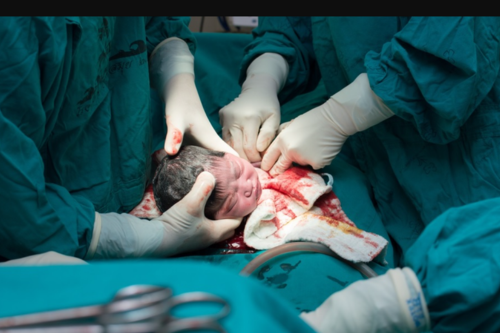
What is a Cesarean Section (LSCS)?
When is Cesarean Section Recommended?
Doctors recommend a Cesarean section when certain complications make vaginal delivery unsafe or difficult. Some conditions arise during pregnancy, while others occur during labor.
Common reasons for performing LSCS include:
1. Fetal Distress
If the baby’s heartbeat becomes abnormal or the baby is not receiving enough oxygen, doctors may perform an emergency Cesarean section.
2. Prolonged or Difficult Labor
Sometimes labor does not progress even after several hours. If the cervix does not dilate properly or the baby cannot move through the birth canal, a C-section becomes necessary.
3. Breech or Abnormal Baby Position
If the baby is positioned feet-first or sideways inside the womb, vaginal delivery may not be safe.
4. Placenta Problems
Conditions such as placenta previa, where the placenta blocks the cervix, require Cesarean delivery.
5. Multiple Pregnancy
Women carrying twins or triplets may require Cesarean delivery depending on the position of the babies.
6. Previous Cesarean Section
In some cases, women who have had a previous C-section may need another Cesarean delivery.
7. Maternal Health Conditions
Medical issues like high blood pressure, diabetes, infections, or heart problems may make Cesarean delivery safer.
Dr. Meenakshi Charaya Khobragade carefully evaluates each pregnancy and recommends the most appropriate delivery method.
Types of Cesarean Section
Cesarean deliveries can be categorized based on the situation and medical requirement.
Planned (Elective) Cesarean Section
Doctors schedule this procedure in advance when they already know that vaginal delivery may not be safe.
Emergency Cesarean Section
Doctors perform this procedure when unexpected complications occur during labor.
Repeat Cesarean Section
Women who previously delivered via C-section may require another Cesarean delivery depending on medical factors.
Dr. Meenakshi Charaya Khobragade ensures proper evaluation before deciding the type of delivery.
How is a Cesarean Section Performed?
The Cesarean procedure follows a carefully planned medical process to ensure safety and comfort.
Step 1: Preparation
Before surgery, doctors conduct medical evaluations including blood tests and monitoring the baby’s heartbeat. The patient receives instructions about fasting and medications.
Step 2: Anesthesia
Most Cesarean sections are performed under spinal or epidural anesthesia, which numbs the lower body while the mother remains awake. This allows the mother to experience the moment of birth.
Step 3: Surgical Incision
The doctor makes a small horizontal incision in the lower abdomen and uterus. This incision allows safe access to the baby.
Step 4: Delivery of the Baby
The doctor gently delivers the baby through the incision. The medical team immediately checks the baby’s health and ensures proper breathing.
Step 5: Removal of Placenta
After the baby is delivered, the placenta is removed carefully.
Step 6: Closing the Incision
The doctor stitches the uterus and abdominal layers carefully to promote proper healing.
The entire procedure usually takes 30 to 60 minutes.
Benefits of Cesarean Section
Although Cesarean delivery is a surgical procedure, it offers several benefits when medically required.
Safe Delivery in Complicated Pregnancies
C-section reduces risks when complications threaten mother or baby.
Controlled Medical Environment
The procedure takes place in a sterile operating room with skilled doctors and monitoring equipment.
Reduced Birth Trauma
Cesarean delivery protects the baby when vaginal delivery could cause injury.
Life-Saving Procedure
In emergencies such as fetal distress, Cesarean section can save both mother and baby.
Under the expert care of Dr. Meenakshi Charaya Khobragade, patients receive personalized treatment and proper guidance.
Recovery After Cesarean Section
Recovery after LSCS requires proper care, rest, and medical guidance.
Hospital Stay
Most mothers stay in the hospital for 3 to 4 days after surgery for monitoring and recovery.
Pain Management
Doctors provide medications to control pain and discomfort.
Early Movement
Patients are encouraged to walk slowly after surgery to prevent complications and improve circulation.
Wound Care
The surgical incision should remain clean and dry. Doctors provide instructions for proper wound care.
Breastfeeding
Mothers can start breastfeeding soon after delivery with guidance from healthcare professionals.
Full Recovery
Most women recover completely within 4 to 6 weeks.
Regular follow-up appointments help ensure proper healing.