
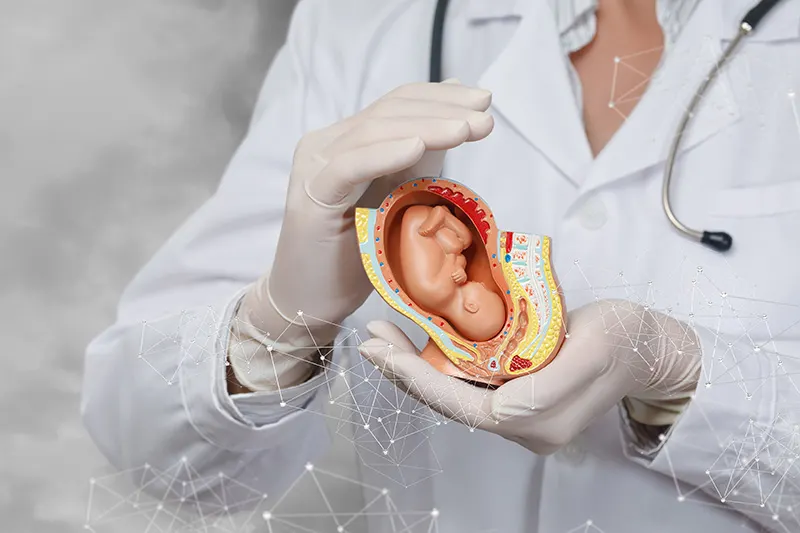
What is Fetal Medicine?
Fetal medicine is a specialized branch of obstetrics. It deals with the diagnosis and management of fetal conditions.
Doctors use advanced imaging and tests. These tools help them study the baby inside the womb.
In addition, fetal medicine specialists manage complications such as:
- High-risk pregnancy
- Genetic disorders
- Structural abnormalities
- Growth issues
Thus, early detection helps doctors take timely action.
When Should You Consult a Fetal Medicine Specialist?
You should consult a fetal medicine expert in the following situations:
- If you have a high-risk pregnancy
- If you are above 35 years of age
- If previous pregnancy had complications
- If screening tests show abnormalities
- If ultrasound detects unusual findings
Additionally, doctors recommend fetal scans at different stages of pregnancy.
Key Services in Fetal Medicine
1. Early Pregnancy Scan
Doctors perform this scan in the first trimester. It confirms pregnancy and checks viability.
Moreover, it helps detect multiple pregnancies.
2. Nuchal Translucency (NT) Scan
Doctors perform this scan between 11–14 weeks. It measures fluid behind the baby’s neck.
As a result, it helps detect chromosomal abnormalities like Down syndrome.
3. Anomaly Scan
Doctors perform this scan between 18–22 weeks. It checks the baby’s organs and structure.
Furthermore, it detects birth defects early.
4. Growth Scan
Doctors monitor fetal growth regularly. This scan ensures the baby grows properly.
In addition, it helps detect growth restriction.
5. Doppler Studies
Doctors use Doppler ultrasound to check blood flow.
Therefore, it helps evaluate the placenta and fetal health.
6. Fetal Echocardiography
Doctors examine the baby’s heart using this test.
As a result, they detect congenital heart defects early.
7. Genetic Testing
Doctors recommend genetic tests when needed.
These include:
Amniocentesis
Chorionic Villus Sampling (CVS)
Thus, these tests confirm genetic conditions.
Advanced Diagnostic Techniques in Fetal Medicine
Modern fetal medicine uses advanced technologies.
High-Resolution Ultrasound
Doctors use this imaging technique to visualize fetal structures clearly.
Therefore, it improves diagnostic accuracy.
Management of High-Risk Pregnancies
Fetal medicine specialists manage high-risk pregnancies carefully.
They monitor both mother and baby closely.
Common high-risk conditions include:
- Diabetes in pregnancy
- High blood pressure
- Thyroid disorders
- Multiple pregnancies
- Previous pregnancy losses
Therefore, early monitoring reduces complications.
Fetal Therapy and Intervention
In some cases, doctors perform fetal interventions.
These treatments happen inside the womb.
Examples include:
- Blood transfusion for fetal anemia
- Laser therapy for twin-to-twin transfusion syndrome
- Fluid drainage procedures
Thus, fetal therapy improves survival rates.
Benefits of Fetal Medicine
Fetal medicine offers many benefits.
- Early detection of abnormalities
- Better pregnancy planning
- Reduced complications
- Improved baby outcomes
- Increased parental confidence
Moreover, it ensures safe delivery.
Role of Counseling in Fetal Medicine
Preparing for a Fetal Medicine Scan
You should prepare properly for scans.
- Follow doctor instructions
- Carry previous reports
- Stay relaxed during the procedure
Moreover, ask questions if you have doubts.