
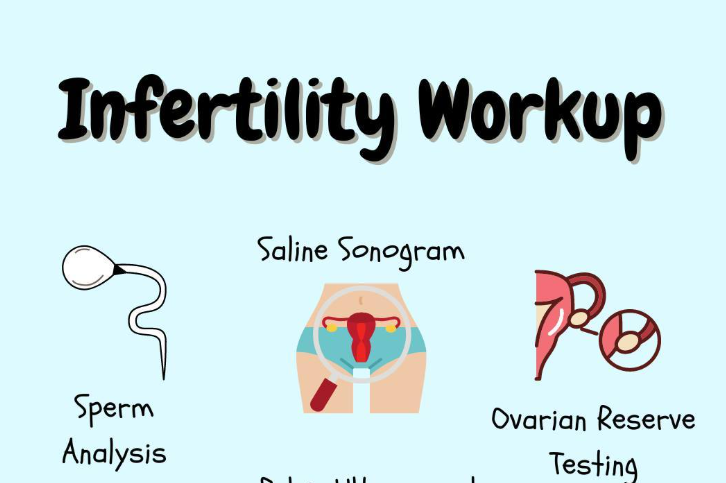
What is Infertility?
Infertility is defined as the inability to conceive after 12 months of regular, unprotected intercourse. However, for women above 35 years, doctors recommend evaluation after 6 months.
Moreover, infertility can affect both men and women equally. Therefore, doctors always evaluate both partners during the infertility workup.
Why is Infertility Workup Important?
Infertility workup plays a crucial role because it helps identify the exact cause of infertility. As a result, doctors can recommend targeted and effective treatments.
Additionally, early diagnosis improves the chances of successful pregnancy. Furthermore, it helps avoid unnecessary treatments and reduces emotional stress.
Step 1: Initial Consultation and Medical History
First and foremost, the infertility journey begins with a detailed consultation. During this stage, doctors gather important medical information.
For Women:
- Menstrual cycle history
- Ovulation patterns
- Previous pregnancies or miscarriages
- Hormonal issues (PCOS, thyroid disorders)
- Lifestyle factors (stress, diet, smoking)
For Men:
- Sexual health history
- Previous fertility issues
- Medical or surgical history
- Lifestyle habits
Step 2: Physical Examination
After the consultation, doctors perform a physical examination of both partners.
In Women:
- Body weight and BMI
- Signs of hormonal imbalance
- Pelvic examination
In Men:
- Examination of testes and penis
- Detection of varicocele or abnormalities
Thus, this step helps detect visible or physical causes of infertility.
Step 3: Ovulation Assessment
Next, doctors evaluate whether the woman is ovulating regularly. Since ovulation is essential for conception, this step is critical.
Common Tests Include:
- Ovulation predictor kits
- Basal body temperature tracking
- Blood tests for progesterone levels
Additionally, ultrasound monitoring helps track follicle development. Therefore, doctors can confirm whether ovulation occurs normally.
Step 4: Hormonal Testing
Hormonal balance plays a vital role in fertility. Hence, doctors recommend blood tests to check hormone levels.
Important Hormones Tested:
- FSH (Follicle Stimulating Hormone)
- LH (Luteinizing Hormone)
- AMH (Anti-Müllerian Hormone)
- Thyroid hormones
- Prolactin
These tests are usually done on specific days of the menstrual cycle. As a result, doctors can accurately assess ovarian function and reserve.
Step 5: Ultrasound Scan
Ultrasound is a non-invasive and essential part of infertility workup. It provides a clear picture of the reproductive organs.
It Helps To:
- Check ovarian follicles
- Detect cysts or fibroids
- Evaluate uterus structure
- Monitor ovulation
Furthermore, transvaginal ultrasound gives more detailed insights. Therefore, it is commonly used in fertility evaluation.
Step 6: Fallopian Tube Testing
Even if ovulation is normal, blocked fallopian tubes can prevent pregnancy. Hence, checking tubal patency is important.
Common Procedures:
- HSG (Hysterosalpingography)
- Sonosalpingography
- Laparoscopy (in complex cases)
During these tests, doctors check whether the fallopian tubes are open. If blockage is present, they plan appropriate treatment accordingly.
Step 7: Uterine Evaluation
The uterus must be healthy for implantation. Therefore, doctors carefully examine it.
Methods Include:
- Ultrasound
- Hysteroscopy
- MRI (in rare cases)
This step helps identify conditions like:
- Fibroids
- Polyps
- Uterine abnormalities
Consequently, correcting these issues improves pregnancy chances.
Step 8: Semen Analysis (Male Fertility Test)
Simultaneously, male fertility is evaluated through semen analysis. In fact, male factors contribute to nearly 40–50% of infertility cases.
Parameters Checked:
- Sperm count
- Motility (movement)
- Morphology (shape)
- Volume
If abnormalities are found, doctors may recommend further tests or treatments. Therefore, this step is equally importan
Common Causes Identified During Workup
After completing the infertility workup, doctors may identify one or more causes.
Female Factors:
- Ovulation disorders
- PCOS
- Blocked fallopian tubes
- Endometriosis
- Uterine abnormalities
Male Factors:
- Low sperm count
- Poor motility
- Hormonal imbalance
Combined or Unexplained:
In some cases, both partners may have issues. However, sometimes no clear cause is found. This is known as unexplained infertility.
What Happens After the Workup?
Once the diagnosis is complete, doctors create a personalized treatment plan.
Treatment Options Include:
- Lifestyle modification
- Ovulation induction
- IUI (Intrauterine Insemination)
- IVF (In Vitro Fertilization)
- Surgical correction
Therefore, treatment depends entirely on the identified cause.