
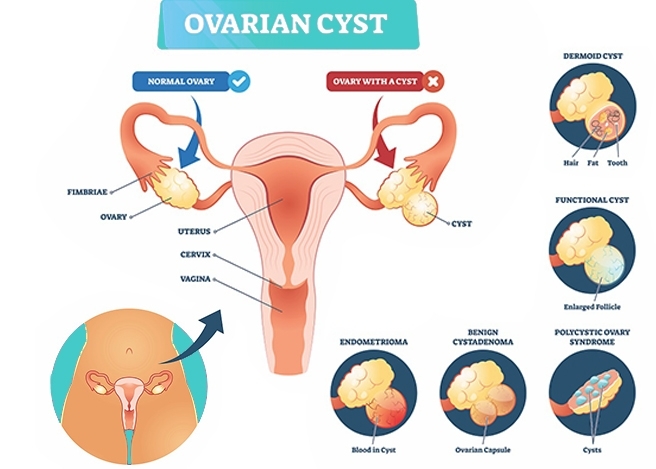
What is an Ovarian Cyst?
An ovarian cyst is a fluid-filled sac that develops on or inside an ovary. Typically, these cysts form during ovulation as part of the normal menstrual cycle. However, in some cases, cysts may grow larger or persist, leading to health concerns.
There are several types of ovarian cysts, including:
- Functional cysts (most common)
- Dermoid cysts
- Endometriomas
- Cystadenomas
While functional cysts usually disappear without treatment, other types may require medical attention.
Causes of Ovarian Cysts
Ovarian cysts can develop due to various reasons. Understanding these causes helps in early detection and prevention.
1. Hormonal Imbalance
First and foremost, hormonal fluctuations play a major role in cyst formation. For example, irregular ovulation can lead to functional cysts.
2. Endometriosis
Women with Endometriosis may develop cysts known as endometriomas, which can be painful and affect fertility.
3. Pregnancy
Sometimes, cysts form during early pregnancy to support the developing fetus. However, they usually resolve naturally.
4. Pelvic Infections
Severe infections can spread to the ovaries and lead to cyst formation.
5. Polycystic Ovary Syndrome (PCOS)
Polycystic Ovary Syndrome is another major cause where multiple small cysts develop due to hormonal imbalance.
Symptoms of Ovarian Cysts
In many cases, ovarian cysts do not cause noticeable symptoms. However, when symptoms occur, they may include:
- Pelvic pain or discomfort
- Bloating or abdominal swelling
- Irregular menstrual cycles
- Pain during intercourse
- Frequent urination
- Difficulty in emptying the bladder
In severe cases, symptoms such as sudden sharp pain, vomiting, or dizziness may indicate complications like rupture or torsion. Therefore, immediate medical attention is crucial.
Diagnosis of Ovarian Cysts
Early and accurate diagnosis plays a vital role in effective management. Doctors typically use the following methods:
1. Pelvic Examination
Initially, the doctor performs a physical examination to detect abnormalities.
2. Ultrasound
An ultrasound helps determine the size, shape, and type of cyst. It is the most common diagnostic tool.
3. Blood Tests
Doctors may check hormone levels or tumor markers like CA-125 to rule out serious conditions.
4. CT Scan or MRI
In complex cases, advanced imaging provides a clearer view of the cyst.
Ovarian Cyst Management Options
Management depends on several factors, including the type, size, symptoms, and patient’s age. Let’s explore the treatment approaches.
1. Watchful Waiting
In many cases, doctors recommend monitoring the cyst rather than immediate treatment. This approach works best for small, asymptomatic cysts.
Doctors schedule regular ultrasounds
Most cysts resolve within a few months
No immediate medication or surgery is required
Thus, watchful waiting avoids unnecessary intervention while ensuring safety.
2. Medications
If the cyst persists or causes symptoms, doctors may prescribe medications.
Hormonal Contraceptives
Birth control pills help regulate hormones and prevent new cysts from forming. However, they do not shrink existing cysts.
Pain Relievers
Doctors may recommend medications to manage discomfort effectively.
Consequently, medications provide symptom relief and reduce recurrence risk.
3. Minimally Invasive Surgery
When cysts grow large, persist, or cause severe symptoms, surgery becomes necessary.
Laparoscopy
This minimally invasive procedure removes the cyst using small incisions.
Faster recovery
Less pain
Minimal scarring
Therefore, laparoscopy is the preferred option for most cases.
4. Open Surgery (Laparotomy)
In rare cases, doctors perform open surgery when:
The cyst is very large
Cancer is suspected
Complications arise
Although recovery takes longer, this method ensures complete removal when needed.
5. Treatment for Underlying Conditions
If an underlying condition like Polycystic Ovary Syndrome or Endometriosis causes cysts, doctors focus on managing that condition.
As a result, treating the root cause helps prevent recurrence.
Complications of Ovarian Cysts
Although most cysts are harmless, some may lead to complications.
1. Ovarian Torsion
A large cyst can cause the ovary to twist, cutting off blood supply. This condition requires emergency surgery.
2. Cyst Rupture
A ruptured cyst can cause severe pain and internal bleeding.
3. Fertility Issues
Certain cysts may affect ovulation and fertility.
Therefore, timely diagnosis and treatment are essential to avoid serious outcomes.
Lifestyle and Home Management Tips
Along with medical treatment, lifestyle changes play a crucial role in managing ovarian cysts.
1. Maintain a Healthy Diet
A balanced diet helps regulate hormones. Include:
Fresh fruits and vegetables
Whole grains
Lean proteins
2. Exercise Regularly
Regular physical activity improves hormonal balance and reduces symptoms.
3. Manage Stress
Stress can disrupt hormones. Therefore, practices like yoga and meditation can help.
4. Avoid Processed Foods
Reducing sugar and processed foods supports overall reproductive health.
Prevention of Ovarian Cysts
Although not all cysts are preventable, certain steps can reduce the risk.
- Regular gynecological check-ups
- Hormonal balance management
- Early treatment of menstrual irregularities
- Monitoring symptoms closely
Thus, preventive care plays a key role in long-term health.
Advanced Treatment Options
Modern medicine offers advanced solutions for ovarian cyst management.
1. Robotic Surgery
Robotic-assisted procedures provide precision and faster recovery.
2. Fertility-Preserving Treatments
Doctors focus on preserving ovarian function, especially in younger women.
3. Personalized Treatment Plans
Each patient receives a tailored approach based on their condition and health goals.