
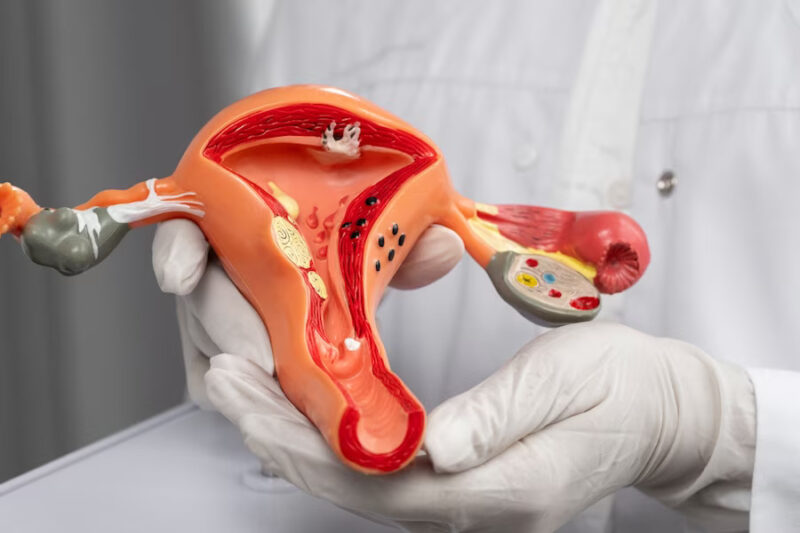
What is an Ovarian Cyst?
Types of Ovarian Cysts
- Functional cysts (most common)
- Dermoid cysts
- Endometriomas
- Cystadenomas
While functional cysts usually disappear naturally, other types may require surgical treatment. Hence, proper diagnosis plays a crucial role in planning surgery.
When is Ovarian Cyst Surgery Required?
Doctors do not recommend surgery in every case. Instead, they carefully evaluate multiple factors before deciding. However, surgery becomes necessary under the following conditions:
- When the cyst size exceeds 5–10 cm
- If the cyst persists for several menstrual cycles
- When severe pelvic pain occurs frequently
- If there is a risk of ovarian torsion
- When imaging suggests possible cancer
- If the cyst causes fertility problems
In addition, postmenopausal women often require more careful evaluation because the risk of malignancy increases with age.
Symptoms That Indicate Surgical Need
Although many ovarian cysts remain asymptomatic, some produce noticeable symptoms. Therefore, you should never ignore the following signs:
- Persistent pelvic pain
- Bloating or abdominal swelling
- Pain during intercourse
- Irregular menstrual cycles
- Frequent urination
- Sudden sharp pain (possible rupture)
If you experience any of these symptoms, you should consult a gynecologist immediately. Early diagnosis helps in better surgical planning and faster recovery.
Diagnosis Before Surgery Planning
Before planning ovarian cyst surgery, doctors perform several diagnostic tests. These tests help determine the size, type, and nature of the cyst.
Common Diagnostic Methods
- Ultrasound Scan – First-line imaging technique
- CT Scan or MRI – Provides detailed internal view
- Blood Tests (CA-125) – Helps assess cancer risk
- Pregnancy Test – Rules out pregnancy-related conditions
Moreover, doctors analyze all reports carefully to choose the most suitable surgical approach. As a result, patients receive safe and effective treatment.
Ovarian Cyst Surgery Planning Process
Planning ovarian cyst surgery involves multiple steps to ensure patient safety and successful outcomes. Therefore, doctors follow a systematic approach.
1. Medical Evaluation
Initially, the doctor reviews your medical history, symptoms, and diagnostic reports. Additionally, they assess your overall health condition.
2. Choosing the Right Surgical Method
Based on the cyst type and size, doctors select the most appropriate procedure. Furthermore, they consider factors like age, fertility goals, and risk level.
3. Preoperative Preparation
Before surgery, patients undergo:
- Blood tests
- ECG (heart checkup)
- Fitness clearance
Doctors also advise fasting for several hours before the procedure.
4. Patient Counseling
Importantly, doctors explain the procedure, risks, and recovery expectations. This step ensures that patients feel confident and well-informed.
Types of Ovarian Cyst Surgeries
There are mainly two types of surgeries used for ovarian cyst removal. Each method offers specific benefits depending on the condition.
1. Laparoscopic Surgery (Minimally Invasive)
Laparoscopic surgery is the most commonly preferred method. In this procedure, the surgeon makes small incisions and uses a camera to remove the cyst.
Advantages:
- Smaller cuts and minimal scarring
- Faster recovery
- Less pain
- Short hospital stay
Therefore, doctors recommend laparoscopy whenever possible.
2. Open Surgery (Laparotomy)
In certain cases, doctors perform open surgery. This method involves a larger incision in the abdomen.
When is it needed?
- Very large cysts
- Suspicion of cancer
- Complex cases
Although recovery takes longer, this method ensures complete removal in complicated situations.
Recovery After Ovarian Cyst Surgery
Recovery depends on the type of surgery performed. However, most patients recover smoothly with proper care.
After Laparoscopy:
- Recovery within 1–2 weeks
- Minimal discomfort
- Quick return to daily activities
After Open Surgery:
- Recovery may take 4–6 weeks
- More rest required
- Gradual return to routine
Recovery Tips:
- Follow doctor’s instructions carefully
- Take prescribed medications on time
- Avoid heavy lifting
- Maintain proper hygiene
- Attend follow-up visits
Additionally, a healthy diet and light physical activity support faster healing.
Fertility and Ovarian Cyst Surgery
How to Choose the Right Surgeon?
Choosing the right doctor plays a vital role in successful surgery. Therefore, you should consider the following factors:
- Experience in gynecological surgeries
- Hospital reputation
- Patient reviews
- Availability of advanced technology
Additionally, you should feel comfortable discussing your concerns with the doctor.