
What is Heavy Menstrual Bleeding?
Heavy bleeding refers to menstrual periods that last longer than 7 days or involve excessive blood loss. For instance, if you need to change sanitary products every 1–2 hours or pass large blood clots, you may be experiencing abnormal bleeding.
Moreover, this condition can lead to complications such as anemia, fatigue, and reduced quality of life. Hence, early medical attention is crucial.
Common Causes of Heavy Bleeding
Before starting treatment, doctors first identify the underlying cause. Several factors can contribute to heavy menstrual bleeding:
1. Hormonal Imbalance
When estrogen and progesterone levels are not balanced, the uterine lining grows excessively. As a result, heavy bleeding occurs during menstruation.
2. Uterine Fibroids
These are non-cancerous growths in the uterus. They often cause prolonged and heavy periods, especially in women of reproductive age.
3. Polycystic Ovary Syndrome (PCOS)
PCOS disrupts ovulation. Consequently, irregular and heavy periods may occur.
4. Endometriosis
In this condition, tissue similar to the uterine lining grows outside the uterus, leading to pain and heavy bleeding.
5. Thyroid Disorders
Both hypothyroidism and hyperthyroidism can affect menstrual cycles and cause abnormal bleeding.
6. Pregnancy-Related Issues
Miscarriage or ectopic pregnancy can sometimes present as heavy bleeding.
7. Medications
Certain medications, such as blood thinners or hormonal drugs, may increase bleeding.
8. Bleeding Disorders
Rarely, underlying clotting disorders can lead to excessive menstrual bleeding.
Symptoms of Heavy Menstrual Bleeding
It is important to recognize the symptoms early. Common signs include:
- Soaking through sanitary pads or tampons every hour
- Periods lasting more than 7 days
- Passing large blood clots
- Severe abdominal cramps
- Fatigue or weakness
- Shortness of breath due to anemia
If you experience these symptoms consistently, you should consult a doctor immediately.
Diagnosis of Heavy Bleeding
To determine the exact cause, doctors use a combination of clinical evaluation and diagnostic tests.
1. Medical History and Physical Examination
Initially, your doctor will ask about your menstrual cycle, symptoms, and overall health.
2. Blood Tests
These help detect anemia, hormonal imbalances, or clotting disorders.
3. Ultrasound
This imaging test helps identify fibroids, polyps, or other abnormalities in the uterus.
4. Pap Smear
It screens for cervical abnormalities or infections.
5. Endometrial Biopsy
In some cases, doctors may collect a sample of the uterine lining for further analysis.
6. Hysteroscopy
This procedure allows direct visualization of the uterus using a thin camera.
Once the cause is identified, the doctor recommends the most suitable treatment plan.
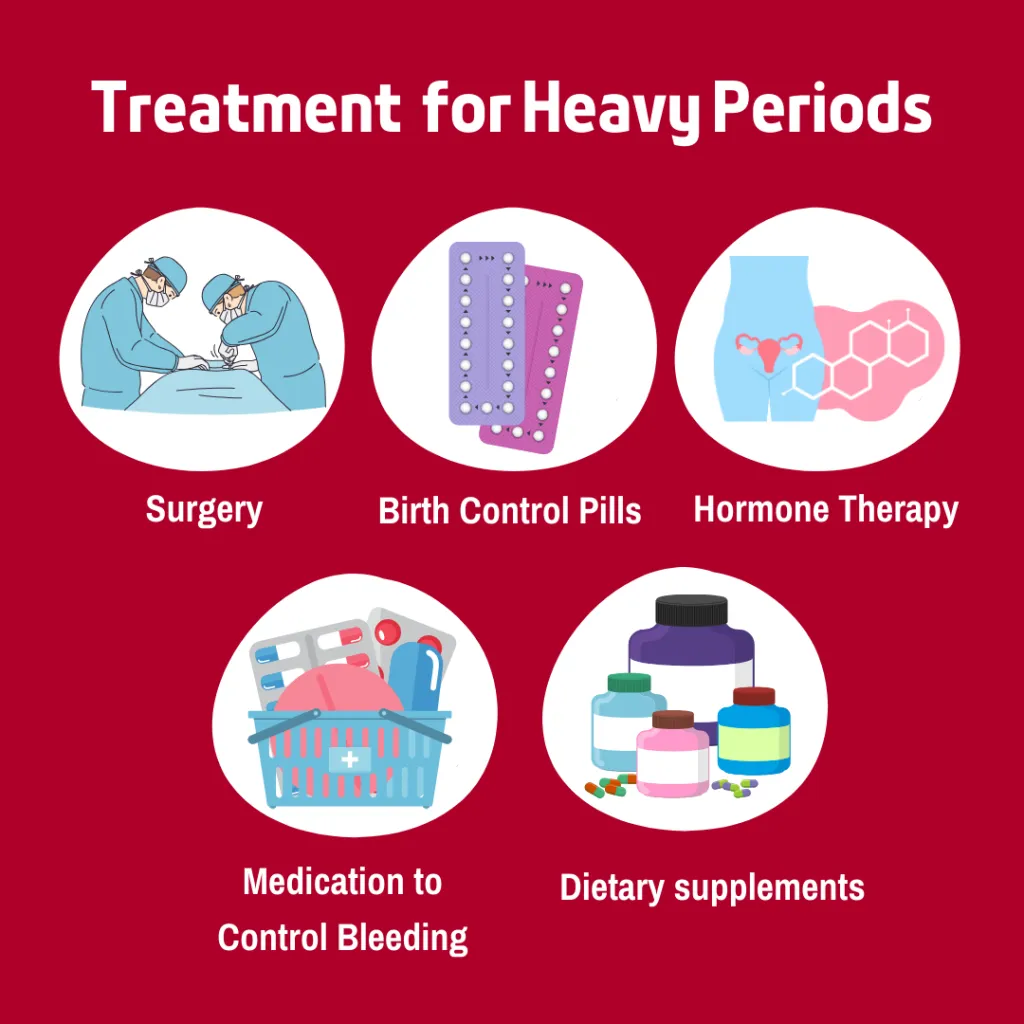
Treatment Options for Heavy Bleeding
Fortunately, several effective treatments are available. The choice depends on the cause, severity, age, and future pregnancy plans.
1. Medications for Heavy Bleeding
In many cases, doctors start with medical treatment.
a. Nonsteroidal Anti-Inflammatory Drugs (NSAIDs)
These medications reduce menstrual blood loss and relieve pain.
b. Hormonal Therapy
Hormones help regulate the menstrual cycle.
Birth control pills
Progesterone tablets
Hormonal injections
As a result, bleeding becomes lighter and more regular.
c. Tranexamic Acid
This medication reduces blood loss by helping blood clot more effectively.
d. Iron Supplements
Since heavy bleeding often causes anemia, iron supplements improve hemoglobin levels and reduce fatigue.
2. Minimally Invasive Procedures
If medications do not provide relief, doctors may recommend minimally invasive procedures.
a. Endometrial Ablation
This procedure removes or destroys the uterine lining. Consequently, menstrual flow becomes lighter or may stop completely.
b. Uterine Artery Embolization (UAE)
Doctors use this procedure to shrink fibroids by blocking their blood supply.
c. Hysteroscopic Removal of Polyps or Fibroids
Using a thin camera, doctors remove growths from the uterus without major surgery.
These treatments are effective and usually involve shorter recovery times.
3. Surgical Treatment Options
In severe cases, surgical intervention may be necessary.
a. Myomectomy
This surgery removes fibroids while preserving the uterus. Therefore, it is suitable for women who want to conceive in the future.
b. Hysterectomy
This is the complete removal of the uterus. It provides a permanent solution to heavy bleeding.
However, doctors recommend this option only when other treatments fail or when the condition is severe.
Lifestyle and Home Remedies
Along with medical treatment, certain lifestyle changes can help manage symptoms.
1. Maintain a Healthy Diet
Include iron-rich foods such as spinach, dates, and lentils. Additionally, vitamin C helps improve iron absorption.
2. Stay Hydrated
Drinking enough water helps maintain overall health and reduces fatigue.
3. Exercise Regularly
Moderate exercise helps regulate hormones and improves blood circulation.
4. Manage Stress
Stress can disrupt hormonal balance. Therefore, practicing yoga, meditation, or breathing exercises can help.
5. Track Your Cycle
Keeping a record of your menstrual cycle helps in early detection and better management.
Complications of Untreated Heavy Bleeding
If left untreated, heavy bleeding can lead to serious health issues:
1. Anemia
Excessive blood loss reduces red blood cells, causing fatigue and weakness.
2. Chronic Fatigue
Constant tiredness can affect work, relationships, and mental health.
3. Fertility Issues
Underlying conditions like fibroids or hormonal imbalance may affect fertility.
4. Reduced Quality of Life
Heavy bleeding can interfere with daily activities and emotional well-being.
Therefore, timely treatment is essential.
Prevention Tips
Although not all cases can be prevented, certain steps can reduce the risk:
- Maintain a balanced diet
- Get regular health checkups
- Manage hormonal conditions like PCOS or thyroid disorders
- Avoid self-medication
- Follow doctor’s advice for menstrual health
Advanced Treatment Approaches
Modern medicine offers advanced and highly effective treatment options. For example:
- Laser-based procedures for uterine conditions
- Robotic-assisted surgeries
- Advanced hormonal therapies
These techniques ensure better results, faster recovery, and minimal complications.